 Classic car restoration and maintenance workshops not only get to take on major projects but are also ready and willing to take on the day-to-day issue of ensuring that vehicles that they have responsibility for have to be serviced on a regular basis. That entails dealing with fluids, power systems and even tyres.
With cordless mechanical service and assembly tools now readily available, standards of mobility, safety and efficiency have increased considerably, all while minimising workshop clutter and setup time.
When vehicles are being serviced, a large volume of fuels must be transferred and replaced. Having a cordless fluid transfer pump around makes this procedure a simple task, moving liquids efficiently and precisely from one container to another or within vehicle systems. In classic car workshops, cordless fluid transfer pumps are frequently utilised for the transfer of engine oil, gearbox oil, differential lubricant, brake fluid, coolant or fuel.
Classic cars of the Fifties and Sixties frequently do not provide easy access to drainage points or modern service access, making controlled fluid transfer crucial. Cordless pumps enable technicians to efficiently extract or refill fluids while minimising spills, lowering the risk of contamination and protecting painted or trimmed surfaces from potential damage.
Classic car restoration and maintenance workshops not only get to take on major projects but are also ready and willing to take on the day-to-day issue of ensuring that vehicles that they have responsibility for have to be serviced on a regular basis. That entails dealing with fluids, power systems and even tyres.
With cordless mechanical service and assembly tools now readily available, standards of mobility, safety and efficiency have increased considerably, all while minimising workshop clutter and setup time.
When vehicles are being serviced, a large volume of fuels must be transferred and replaced. Having a cordless fluid transfer pump around makes this procedure a simple task, moving liquids efficiently and precisely from one container to another or within vehicle systems. In classic car workshops, cordless fluid transfer pumps are frequently utilised for the transfer of engine oil, gearbox oil, differential lubricant, brake fluid, coolant or fuel.
Classic cars of the Fifties and Sixties frequently do not provide easy access to drainage points or modern service access, making controlled fluid transfer crucial. Cordless pumps enable technicians to efficiently extract or refill fluids while minimising spills, lowering the risk of contamination and protecting painted or trimmed surfaces from potential damage.
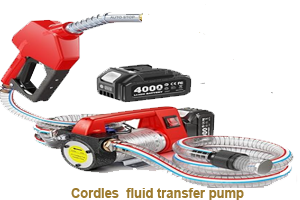 In addition, their portability is particularly advantageous when called upon to drain or fill fluid from vehicles that are positioned on lifts, dollies or even located in storage areas out with the boundaries of the workshop. Numerous contemporary cordless pumps provide adjustable flow rates, allowing for meticulous management of delicate systems like pre-war gearboxes or overdrive units.
Electrical reliability in classic cars can often be inconsistent, especially during the recommissioning process or following extended periods of inactivity. A cordless jump starter or booster pack offers a convenient, self-sufficient power source for starting engines independently, eliminating the requirement for another vehicle or a mains-powered charger.
In addition, their portability is particularly advantageous when called upon to drain or fill fluid from vehicles that are positioned on lifts, dollies or even located in storage areas out with the boundaries of the workshop. Numerous contemporary cordless pumps provide adjustable flow rates, allowing for meticulous management of delicate systems like pre-war gearboxes or overdrive units.
Electrical reliability in classic cars can often be inconsistent, especially during the recommissioning process or following extended periods of inactivity. A cordless jump starter or booster pack offers a convenient, self-sufficient power source for starting engines independently, eliminating the requirement for another vehicle or a mains-powered charger.
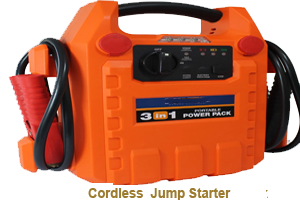 These compact units serve a crucial role in workshop diagnostics, enabling technicians to effectively test starter motors, charging systems, and ignition circuits. Conventional jumper cables have their limitations, while cordless booster packs minimise the pressure of improper connections and voltage surges that may harm delicate wiring or sensitive electrical components. Many contemporary units feature voltage displays and overload protection, enhancing safety for use on older 6-volt or early 12-volt systems when appropriately specified.
 Fluid extraction is a common procedure in restoration and maintenance tasks. A cordless vacuum fluid extractor is typically utilised for the removal of engine oil, brake fluid, clutch fluid, power steering fluid or fuel from tanks and lines.
In classic vehicles, where drain plugs can be seized, difficult to access, or non-standard, hoover extraction offers a non-invasive solution. Cordless extractors are especially advantageous for regular maintenance, enabling oil changes without the need to elevate the vehicle or interfere with underbody parts.
>
Fluid extraction is a common procedure in restoration and maintenance tasks. A cordless vacuum fluid extractor is typically utilised for the removal of engine oil, brake fluid, clutch fluid, power steering fluid or fuel from tanks and lines.
In classic vehicles, where drain plugs can be seized, difficult to access, or non-standard, hoover extraction offers a non-invasive solution. Cordless extractors are especially advantageous for regular maintenance, enabling oil changes without the need to elevate the vehicle or interfere with underbody parts.
>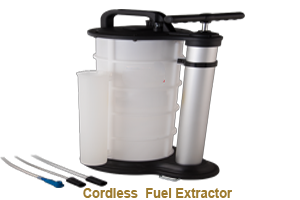 The cordless vacuum fluid extractor’s portability makes them particularly suitable for tasks involving stored vehicles or conducting interim maintenance throughout extensive restoration projects.
Although it may seem to many as a minor issue, maintaining the correct tyre pressure is crucial for ensuring the safe operation of vehicles both in a workshop setting and during road testing. To ensure that the tyres are kept up to the ideal pressure, a cordless tyre inflator or compressor not only enables swift inflation and pressure adjustments, eliminating the hassle of manoeuvring air lines over freshly painted surfaces or sensitive trim.
The cordless vacuum fluid extractor’s portability makes them particularly suitable for tasks involving stored vehicles or conducting interim maintenance throughout extensive restoration projects.
Although it may seem to many as a minor issue, maintaining the correct tyre pressure is crucial for ensuring the safe operation of vehicles both in a workshop setting and during road testing. To ensure that the tyres are kept up to the ideal pressure, a cordless tyre inflator or compressor not only enables swift inflation and pressure adjustments, eliminating the hassle of manoeuvring air lines over freshly painted surfaces or sensitive trim.
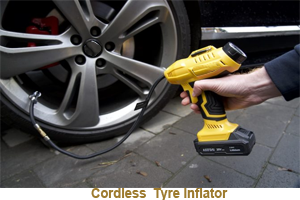 Cordless inflators equipped with digital gauges allow for precise pressure adjustments, ensuring proper handling and suspension performance. These tools prove beneficial when recommissioning vehicles that have been idle for extended periods, as tyres often lose pressure while in storage.
Cordless mechanical service and assembly tools continue to play a major part the classic car restoration and maintenance workshop of today, enhancing mobility, decreasing setup time, and minimising risk to delicate components. Factors that combine to allow the workshop team to service, test and maintain vehicles with greater efficiency.
Cordless inflators equipped with digital gauges allow for precise pressure adjustments, ensuring proper handling and suspension performance. These tools prove beneficial when recommissioning vehicles that have been idle for extended periods, as tyres often lose pressure while in storage.
Cordless mechanical service and assembly tools continue to play a major part the classic car restoration and maintenance workshop of today, enhancing mobility, decreasing setup time, and minimising risk to delicate components. Factors that combine to allow the workshop team to service, test and maintain vehicles with greater efficiency.

- Battery (cordless) powered Drilling, Driving, Fastening Tools
- Battery (cordless) powered Cutting, Grinding, Metal Shaping Tools
- Battery (cordless) powered Sanding, Surface Preparation, Rust Removal Tools
- Battery (cordless) powered Polishing, Detailing, Finishing Tools
- Battery (cordless) powered Bodywork Support Tools
- Battery (cordless) powered Electrical and Wiring Tools
to4